Cavity Optomechanics
Related products: SHFLI, GHFLI, SHFLI-PID, GHF-PID, SHFLI-MF, GHF-MF, SHFLI-MOD, GHF-MOD
Application Description
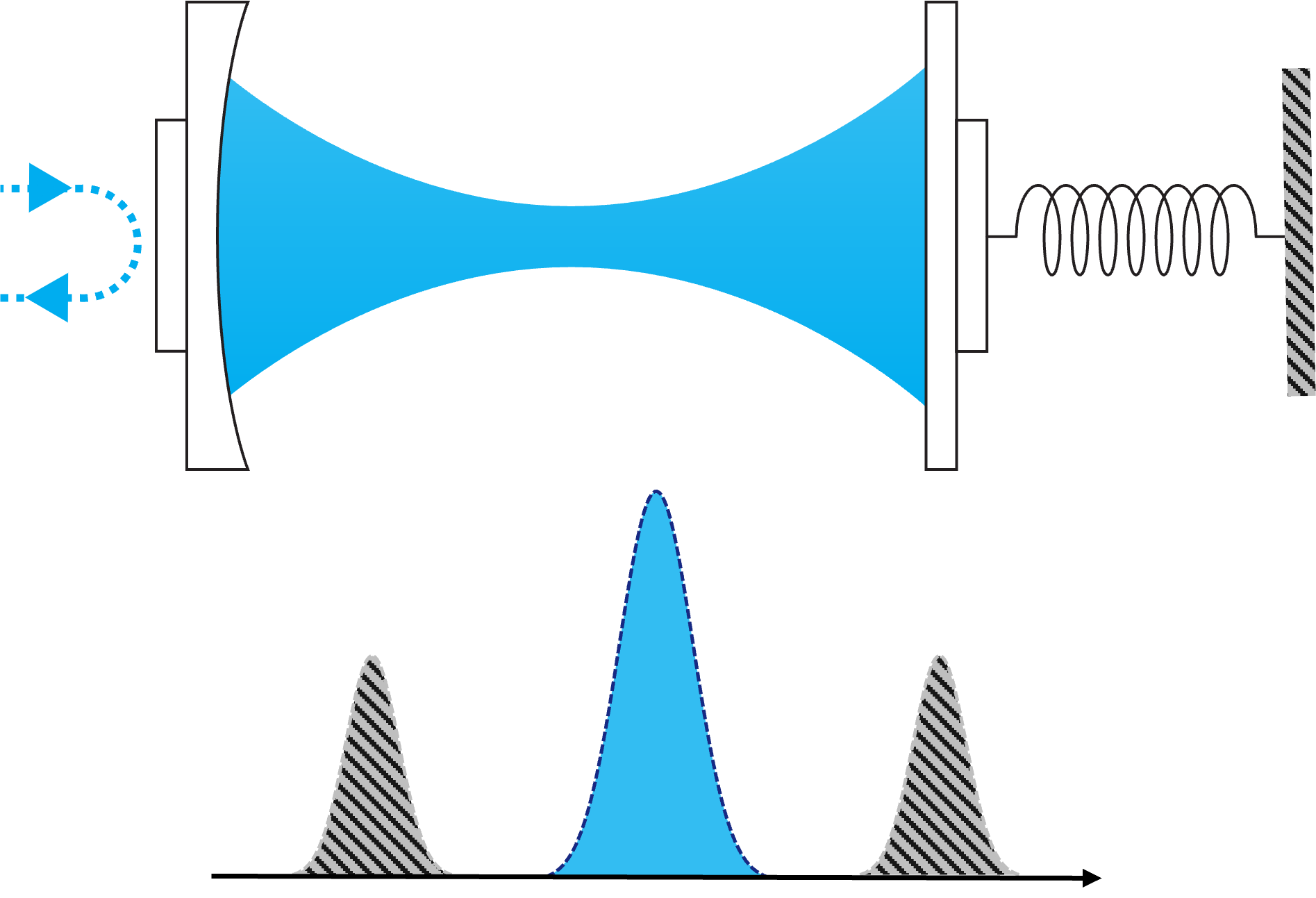
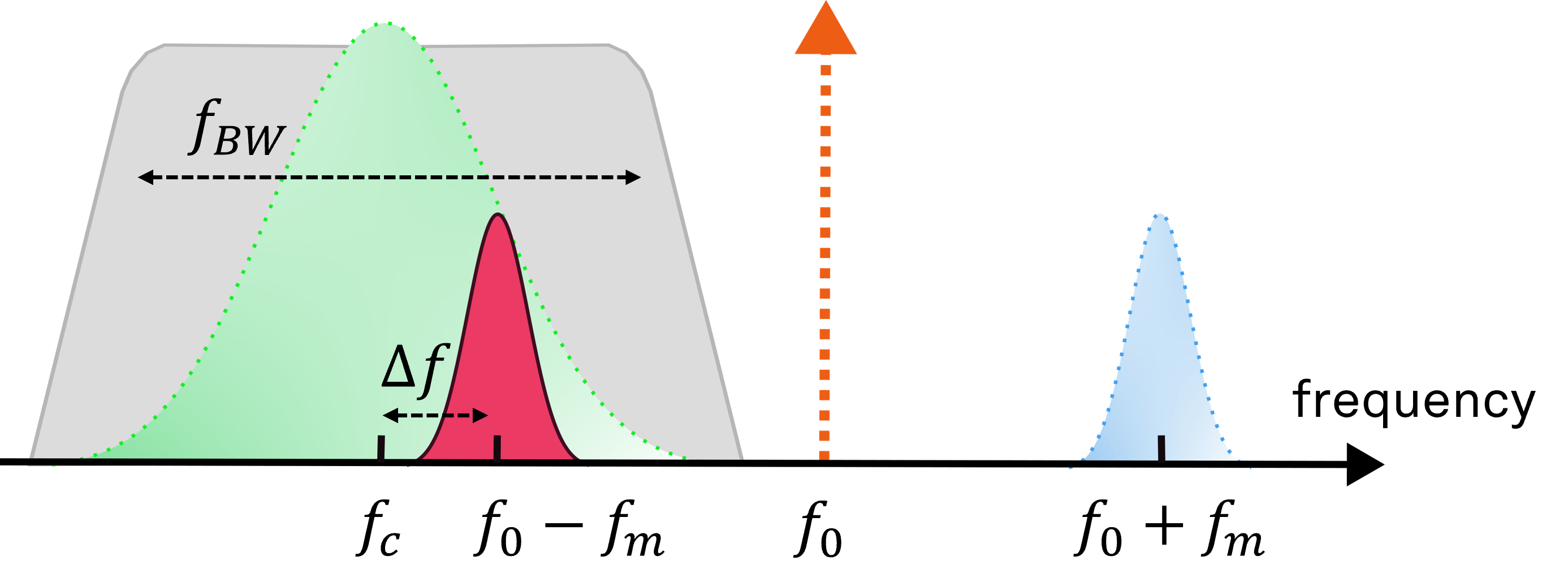
Cavity optomechanics explores the fundamental interaction between photons (light particles) and phonons (mechanical vibrations), enabling precise control and measurement of mechanical resonators at the quantum level. In a typical system, an electromagnetic field is confined within an optical or microwave cavity, which interacts with a mechanical oscillator. This interaction, named optomechanical coupling, produces measurable phenomena such as sidebands—frequency shifts that encode information about the mechanical system’s dynamics. These sidebands, known as Stokes and anti-Stokes lines, can reveal properties such as mechanical displacement, quantum states, or thermal fluctuations, making cavity optomechanics an essential tool in quantum science and sensing.
Applications of cavity optomechanics span a variety of fields, including quantum sensing, topological physics, and quantum memory. Recent advancements in optomechanical systems have broadened their use, enabling hybrid quantum technologies such as quantum transduction, where mechanical motion mediates coherent signal conversion between different quantum platforms. Nano-optomechanical systems are another emerging application, where the phonon-photon coupling happens in small, on-chip structures.
Measurement Strategies
Optomechanical experiments require careful consideration of several factors to ensure reliable measurements. Challenges include the need to detect faint mechanical signals amidst significant noise and to achieve high resolution across a wide frequency range. Variations in cavity properties, such as dimensions and dielectric constants, introduce periodic changes that generate the sidebands, necessitating precise instrumentation to capture these effects.
Measurement strategies typically involve driving the system with a controlled signal and observing the response in the spectral or temporal domain. Traditional approaches, such as spectrum analyzers, offer reliable signal detection but may not provide the sensitivity needed for advanced optomechanics. Modern approaches leverage digital lock-in amplifiers to achieve real-time processing, enhanced signal isolation, and simultaneous operation in multiple spectral regimes. For instance, resolved sideband measurements can be performed using homodyne or heterodyne configurations, providing detailed insight into both the mechanical oscillator and the cavity field.
Microwave Domain Measurements and Cavity Stabilization
Microwave optomechanical systems are typically represented with an LCR circuit, where the microwave cavity is modeled as an inductance (L), capacitance (C), and resistance (R). The mechanical element coupled to this cavity can be represented as an additional capacitance that modulates the cavity resonance periodically. This mechanical element is depicted as a mass-spring model, forming one-half of the additional capacitor.
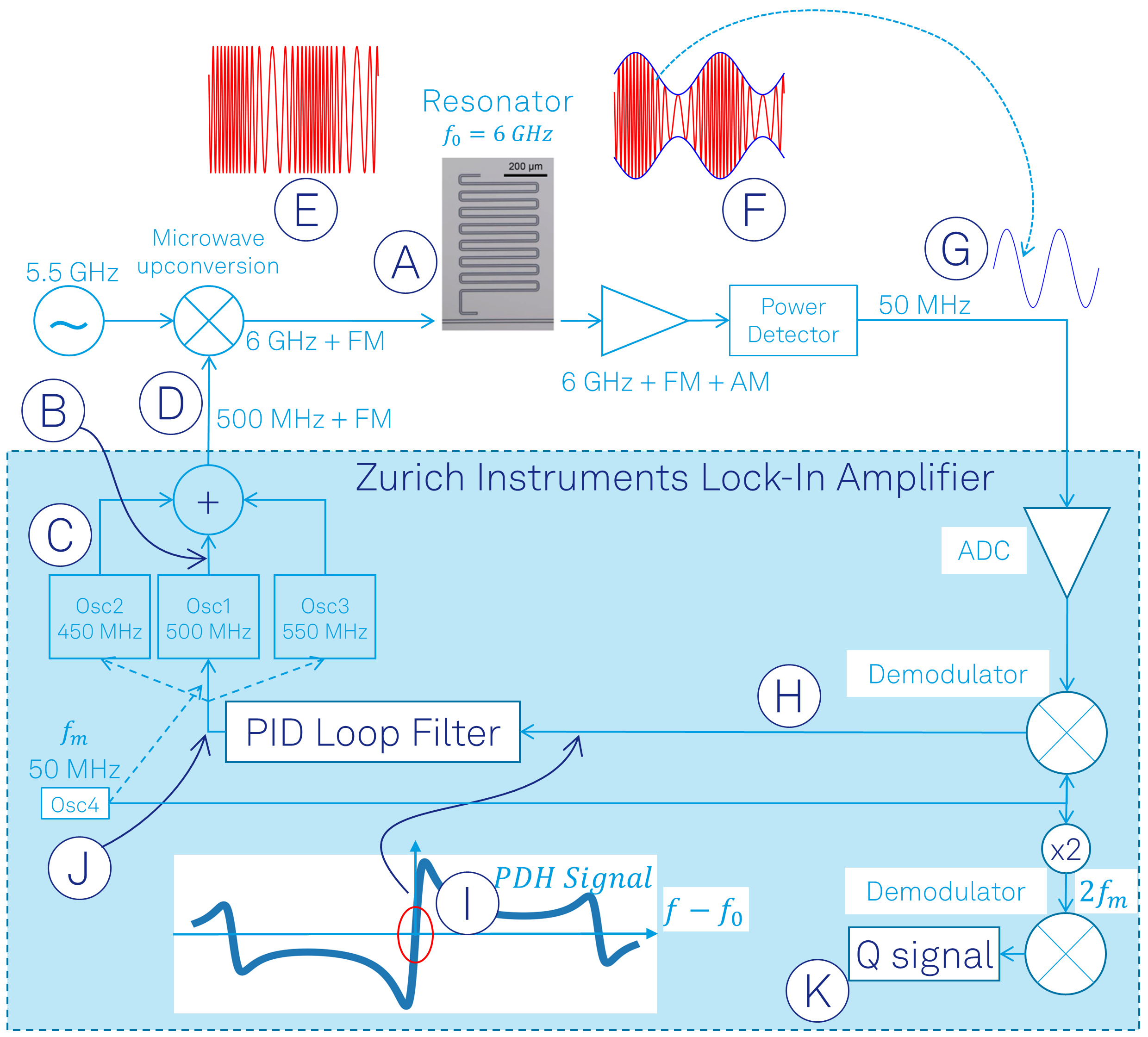
In the microwave domain, measurements are performed by analyzing signals in reflection or transmission. The system is driven by injecting a microwave signal and observing the response with spectrum analyzers or vector network analyzers (VNAs). Zurich Instruments' SHFLI 8.5 GHz Lock-in Amplifier simplifies setups by enabling direct excitation and readout from DC to 8.5 GHz, eliminating external down-conversion, together with sideband modulation and demodulation – thanks to the Multi-Frequency and Modulation Analysis options – within the same instrument, providing a streamlined and efficient approach to studying optomechanical interactions.
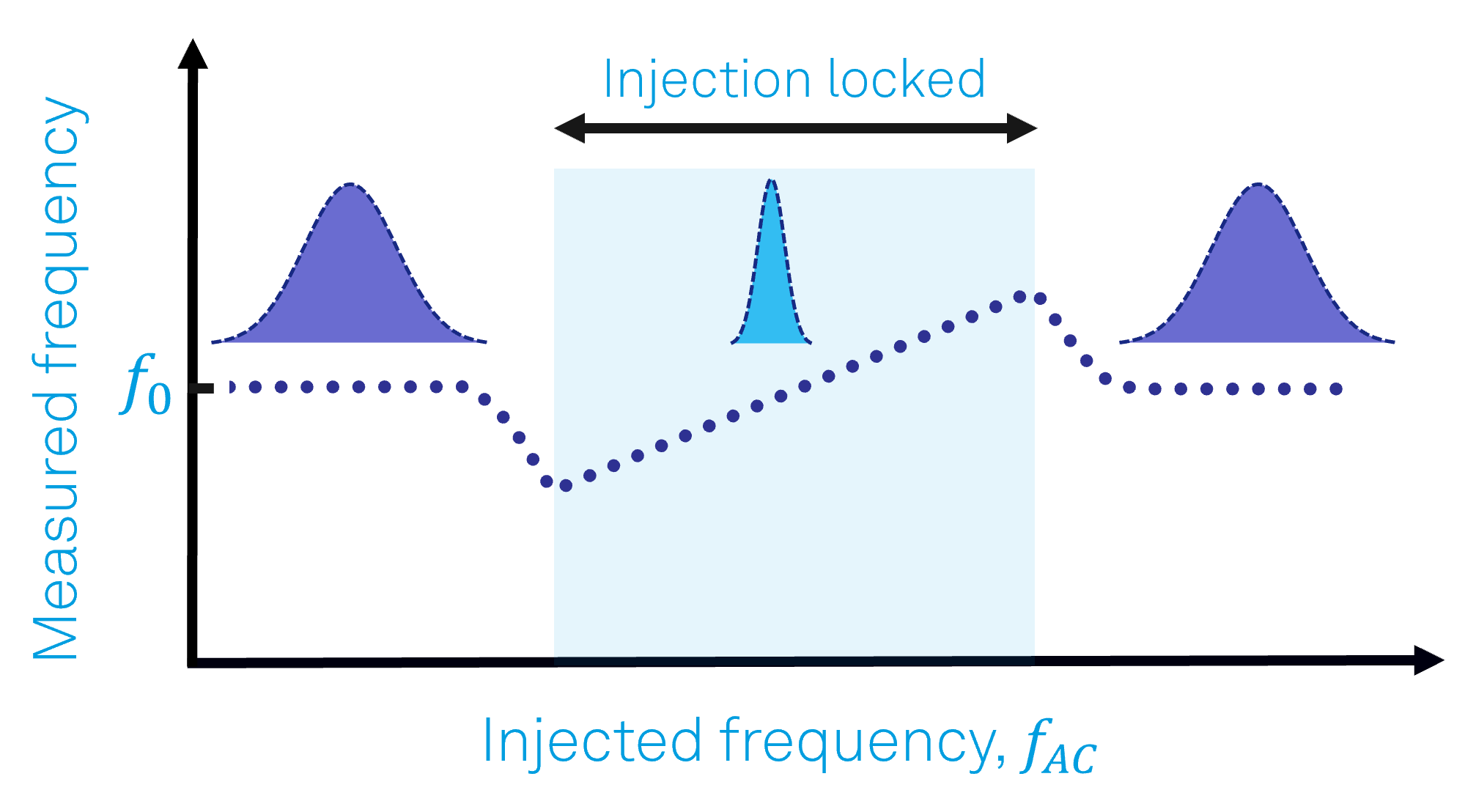
Additionally, when it comes to the stabilization of cavities, environmental fluctuations can shift cavity frequencies, making stable operation challenging. Zurich Instruments' lock-in amplifiers offer integrated PID and PLL controllers for cavity stabilization to ensure stable frequency references and minimal signal degradation.
Optical Domain Measurements
In typical optical domain measurement approaches, an optical cavity is coupled to a mechanical resonator, where the interaction between light and mechanical motion modulates the optical response. To precisely measure and control this interaction, modulation and demodulation are key strategies. A laser source is modulated using an optical modulator, and the resulting signal is measured by a photodetector, whose output is then demodulated with a lock-in amplifier. The phase and amplitude information of the optomechanical system are extracted by analyzing the sidebands in the detected signal.
Quadrature analysis (i.e. extraction of the real and imaginary part of the demodulated signal) is another critical aspect of optical domain measurements, particularly for experiments searching for quantum signatures. These signatures are revealed through quadrature detection, which is directly obtained after lock-in demodulation. Simply connecting a photodiode to a lock-in amplifier allows for direct quadrature analysis in both homodyne and heterodyne configurations. Additionally, in cases where the optical systems require stabilization, such as locking the cavity to the laser, Zurich Instruments’ lock-in amplifiers provide closed-loop feedback control, enabling stabilization also through advanced feedback schemes such as the Pound-Drever-Hall technique.
Product Highlights


The Benefits of Choosing Zurich Instruments
- Versatile measurement capabilities: Perform frequency sweeps, time-domain measurements (ring-down), cavity stabilization, and multi-frequency sideband analysis—all with a single instrument. This flexibility allows you to explore different experimental approaches without additional hardware. Furthermore, the SHFLI-MOD and GHF-MOD Modulation Analysis add-on options, coupled with the SHFLI-MF and GHF-MF Multi-Frequency options, facilitate direct sideband analysis and excitation.
- Direct microwave control and analysis: The GHFLI and SHFLI lock-in amplifiers provide direct excitation and readout up to 1.8 and 8.5 GHz, respectively, eliminating the need for external down-conversion. Additionally, thanks to the unique PID/PLL feedback capabilities at microwave frequencies, they enable precise and fast closed-loop control, allowing cavities, resonators and circuits to be dynamically stabilized and tracked.
- Seamless system integration: With robust APIs (LabVIEW, MATLAB, Python, .NET, C), Zurich Instruments' lock-in amplifiers easily integrate with experimental setups, enabling swift connection with modulators and other key components.