Lock-in Amplifiers
Lock-in amplifiers are an essential part of research laboratories in areas such as optics and photonics, nanotechnology and materials science, quantum technologies, scanning probe microscopy and sensing. Thanks to the lock-in amplifier's ability to extract very small signals buried in noise, it is possible to uncover new science and expand the reach of experimental setups. The working principle of the lock-in amplifier, called demodulation or phase-sensitive detection, rests on mixing the measured signal with a reference frequency followed by low-pass filtering.
Key Benefits
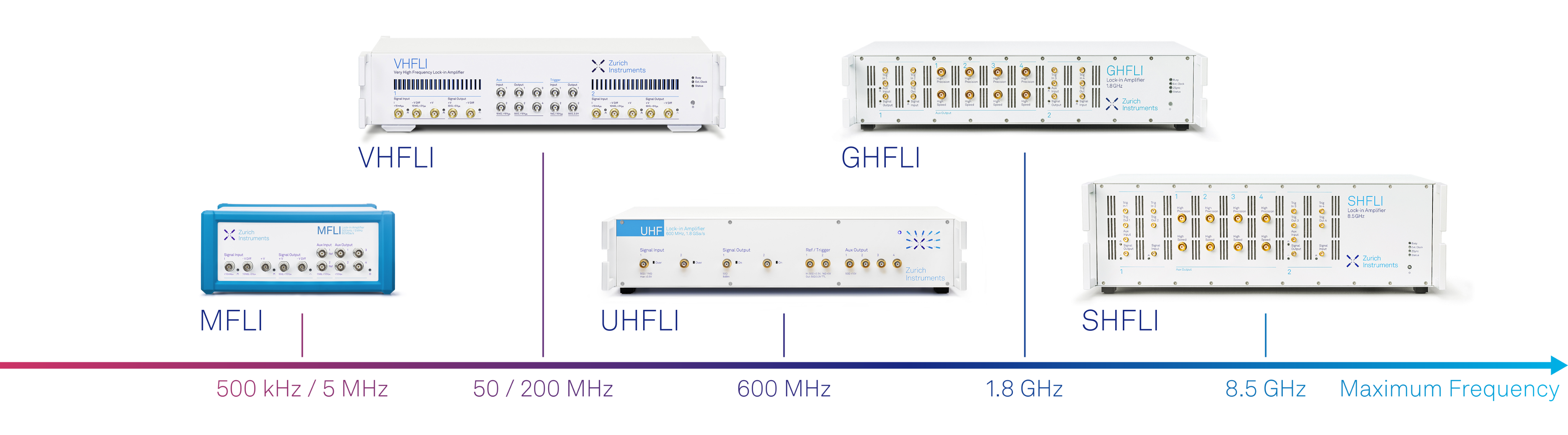
- Measure from DC up to 8.5 GHz
- Precisely measure current and voltage
- Fast measurement times and low noise floor
- Configurability with multiple auxiliary input/outputs
- LabOne® toolset including Scope, Sweeper, & Spectrum Analyzer
- Expand your toolset with upgrade options


LabOne Instrument Control Software
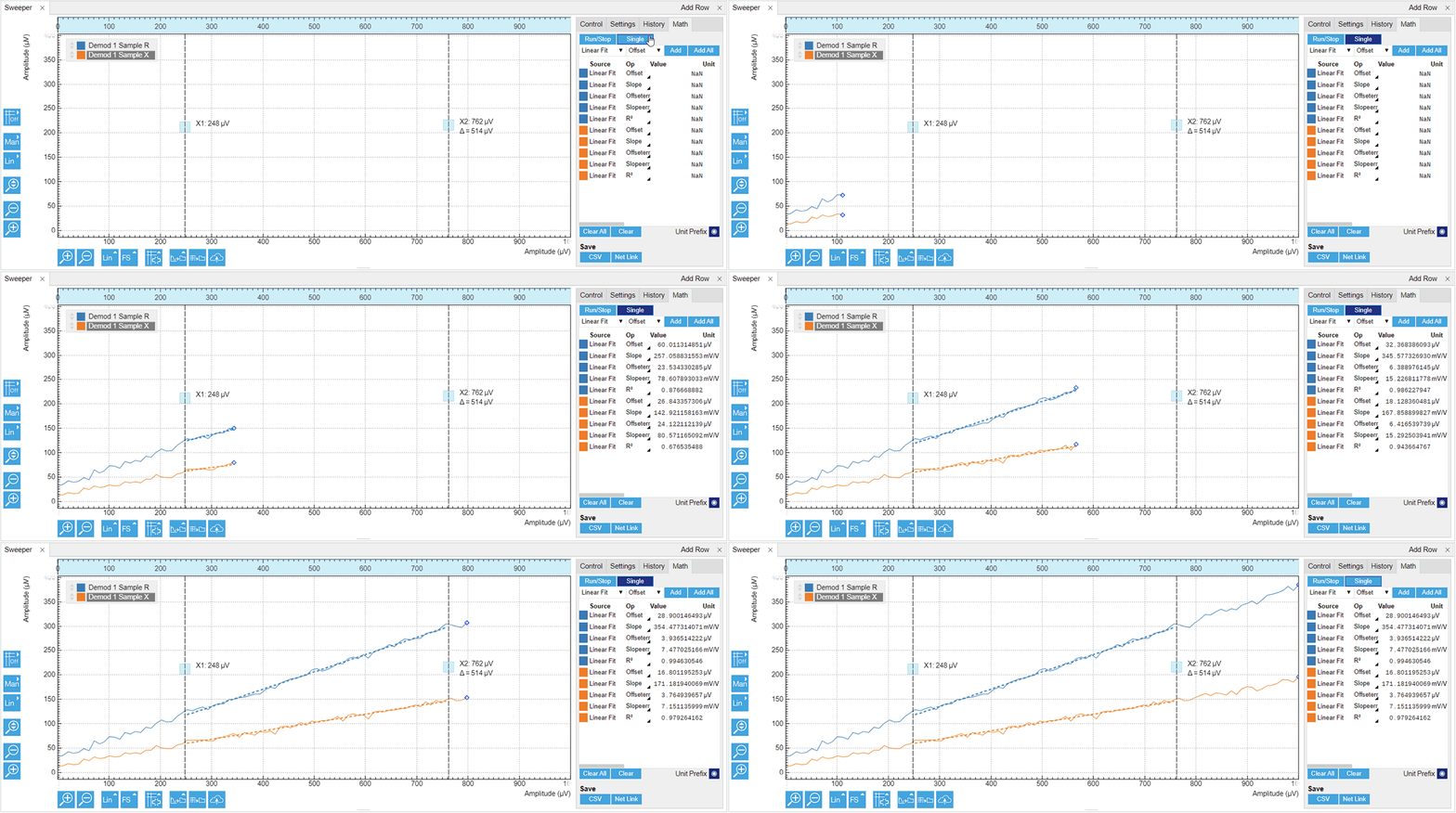
All instruments are equipped with the LabOne® user interface providing time- and frequency-domain signal analysis tools in the form of a scope, a real-time data plotter, a DAQ module, a spectrum analyzer and a sweeper. Upgrade options include phase-locked loops, PID controllers, multi-demodulator and multi-frequency functionalities, as well as boxcar averagers and arbitrary waveform generators. These options expand the functionalities of the lock-in amplifiers; their installation does not require users to send the instrument back to us, as upgrade options are built on the FPGA-powered digital signal processing unit.